Research Pipelines
Translational Lymphology
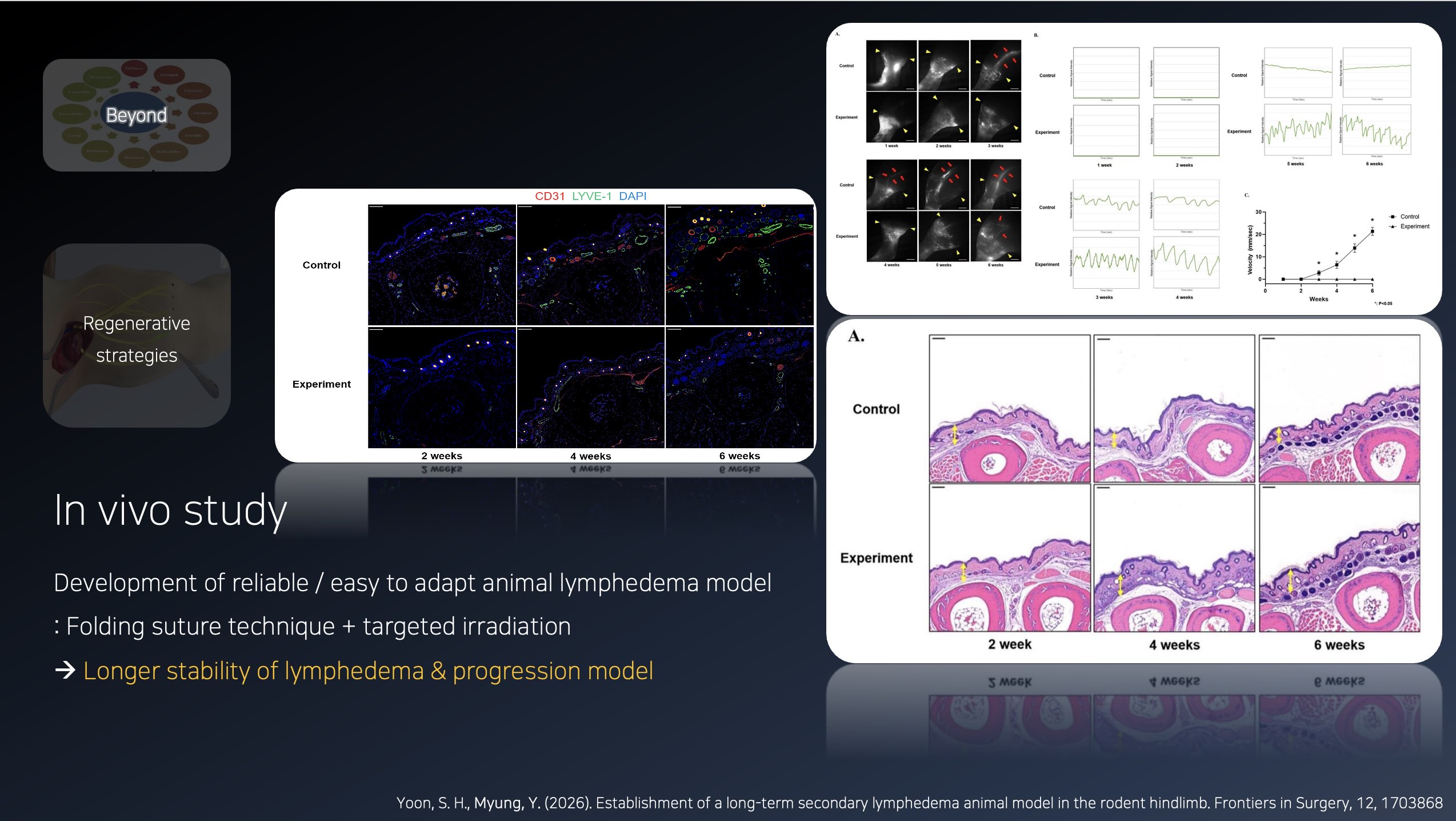
We bridge the gap between benchtop tissue engineering and clinical microsurgery to provide radical solutions for lymphedema. Our integrative approach aims to restore lymphatic function through innovative 3D bioprinting and real-time intraoperative imaging.
Key Publications & Clinical Impact
Nature Communications (2025)
"Clinical ultrasound, photoacoustic, and fluorescence image-guided lymphovenous anastomosis..."
Significantly improved surgical precision by enabling simultaneous real-time visualization of lymphatic and blood vessels using a transparent transducer.
International Journal of Bioprinting (2025)
"Therapeutic effects of 3D-bioprinted mesenchymal stem cell-based artificial lymph nodes..."
Demonstrated that 3D-bioprinted artificial lymph nodes enriched with stem cells can effectively promote lymphatic regeneration in vivo.
Frontiers in Surgery (2026)
"Establishment of a long-term secondary lymphedema animal model in the rodent hindlimb"
Developed a stable, chronic lymphedema model to provide a critical infrastructure for validating novel therapeutics and surgical techniques.
ML-based Surgical Innovation
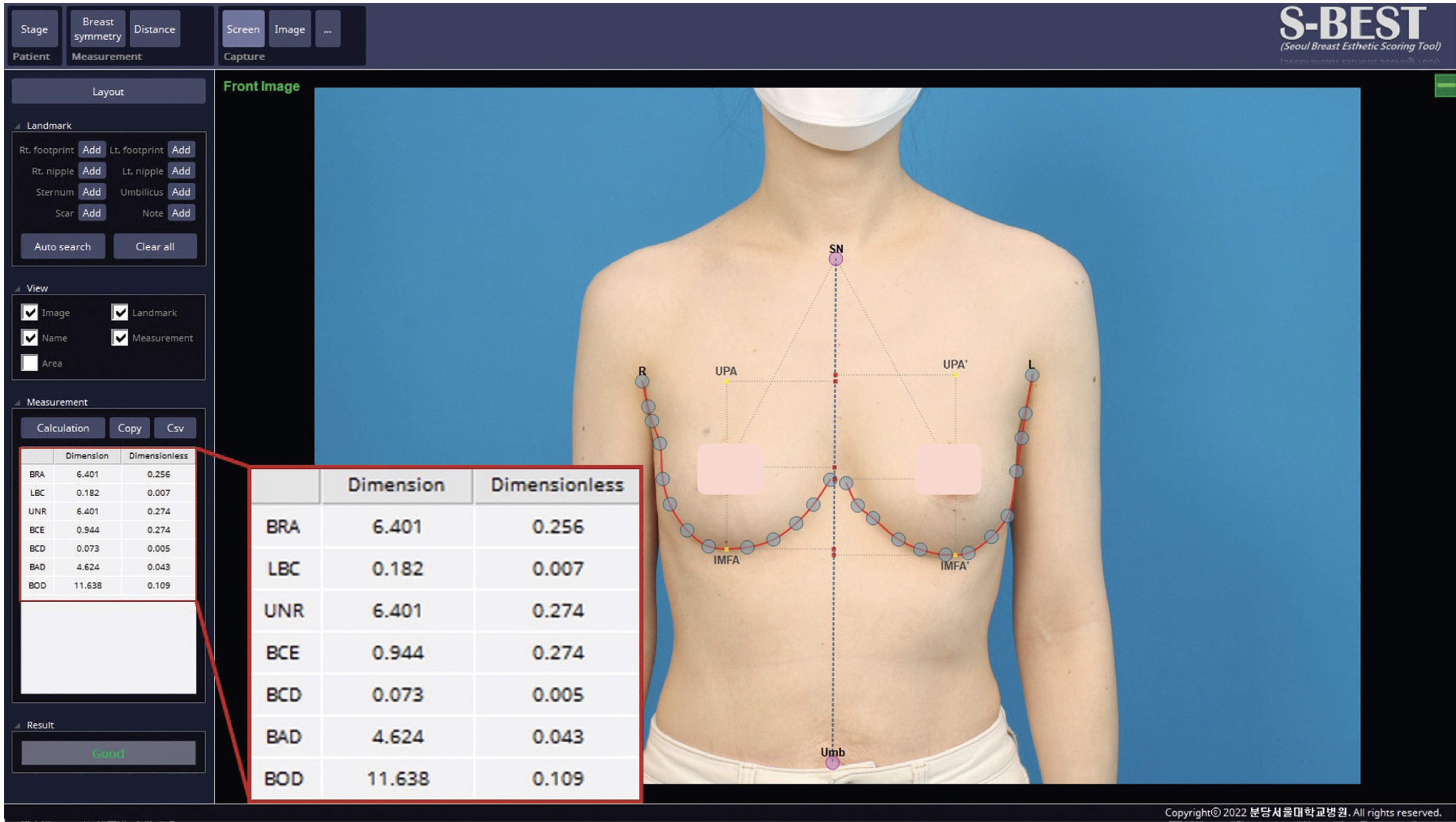
We leverage artificial intelligence to standardize aesthetic evaluations and predict surgical complications with high precision. By digitizing clinical intuition, we develop objective screening tools that assist surgeons in making data-driven decisions.
Key Publications & Technological Advancement
Archives of Plastic Surgery (2024)
"A novel, deep Learning-Based, automatic photometric analysis software for breast aesthetic scoring"
Introduced S-BEST, the world's first AI-driven system to objectively and automatically score aesthetic outcomes in breast surgery.
Plastic and Reconstructive Surgery (2025)
"Diagnosis and Screening of VCFS by Evaluating Facial Photographs Using a Deep Learning–Based Algorithm"
Established a deep learning model capable of early screening for VCFS genetic syndrome with high accuracy using only facial photographs.
Scientific Reports (2021)
"Validating machine learning approaches for prediction of donor related complication..."
Proven the efficacy of predictive models in identifying potential donor-site complications prior to microsurgical breast reconstruction.
Evidence-based Clinical Outcomes
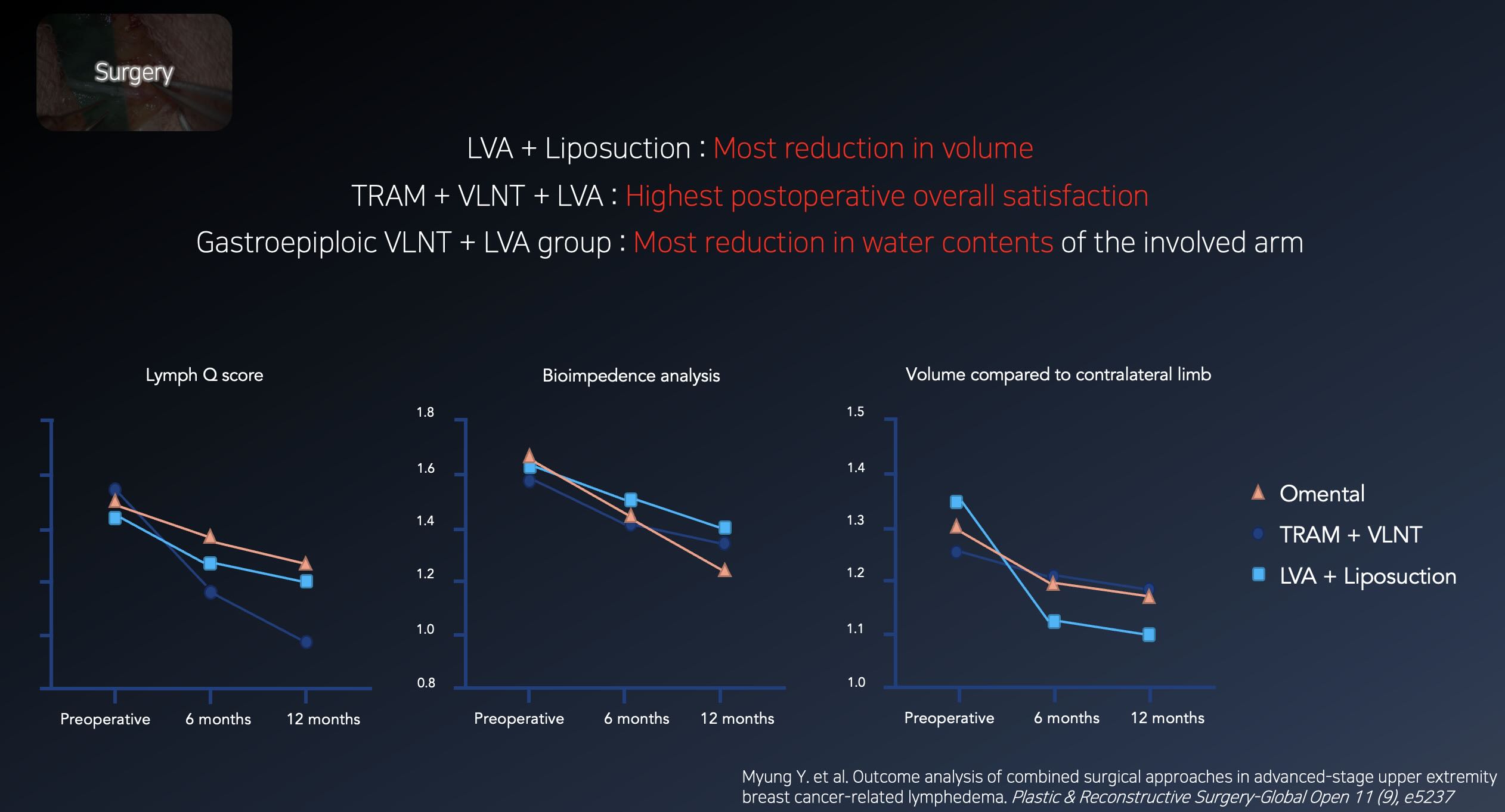
We analyze longitudinal clinical data to optimize surgical pathways and improve the quality of life for cancer survivors. Our evidence-based protocols provide the scientific foundation for safer and more effective reconstructive procedures.
Key Publications & Evidence Generation
PRS – Global Open (2023)
"Outcome analysis of combined surgical approaches in advanced-stage upper extremity BCRL"
Validated the long-term efficacy of combined surgical techniques (LVA + LNT) in reducing edema and improving function for advanced lymphedema patients.
PloS One (2018)
"Objective assessment of flap volume changes and aesthetic results after adjuvant radiation therapy..."
Quantitatively analyzed the impact of radiotherapy on flap volume and aesthetic outcomes, providing a clinical basis for reconstruction planning.
Medicine (2018)
"Quantitative analysis of shoulder function and strength after breast reconstruction"
Emphasized the necessity of post-operative functional rehabilitation by systematically analyzing shoulder strength changes after TRAM flap procedures.